Supporting Workforce Resilience

We offer trauma-informed services to build mental health resilience

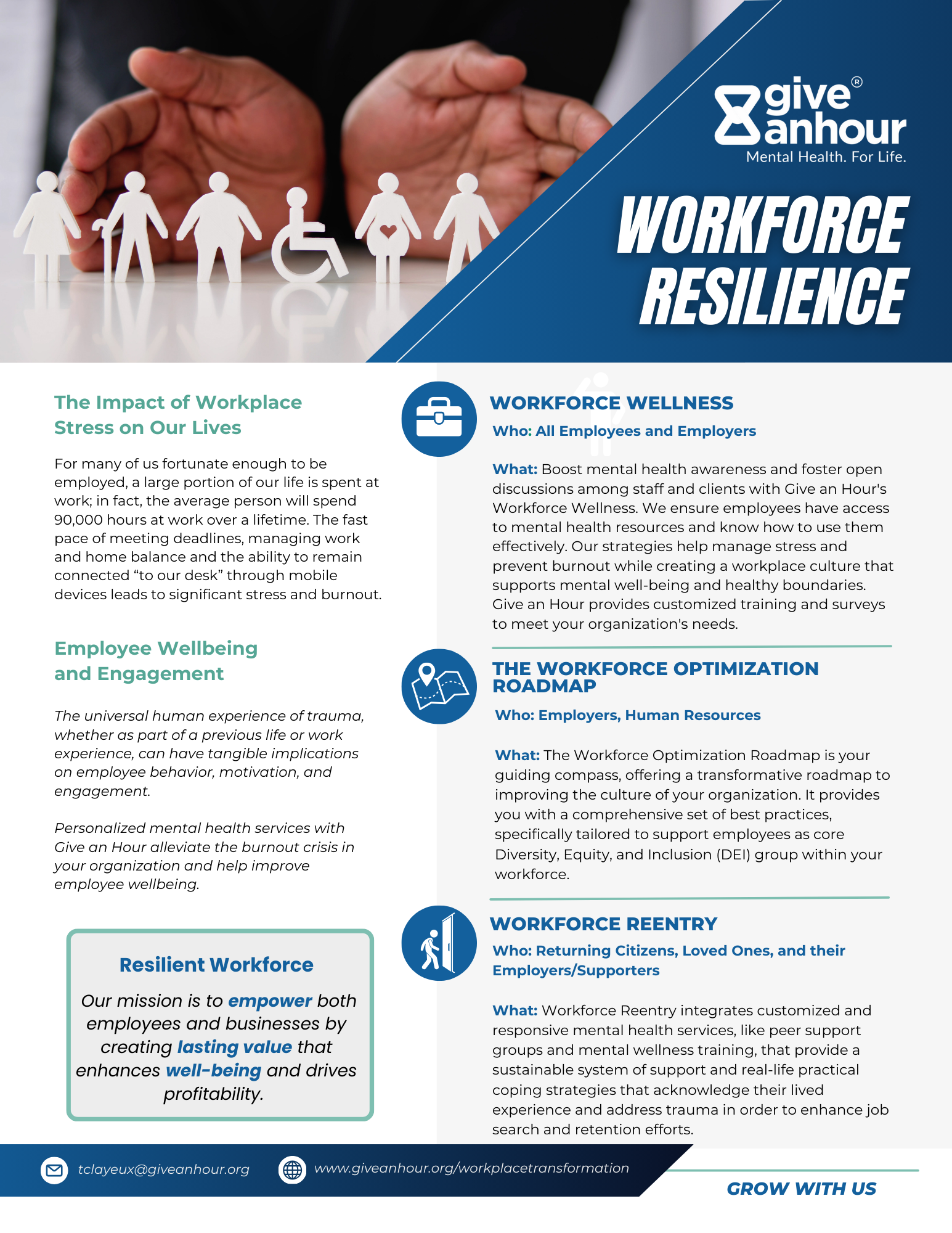
The universal human experience of trauma, whether as part of a previous life or work experience, can have tangible implications on employee behavior, motivation, and engagement. We are here to help employers and employees create opportunities for resilience in the workplace alongside trauma.

For many of us fortunate enough to be employed, a large portion of our life is spent at work; in fact, the average person will spend 90,000 hours at work over a lifetime. The fast pace of meeting deadlines, managing work and home balance and the ability to remain connected “to our desk” through mobile devices leads to significant stress and burnout.

Personalized mental health services with Give an Hour alleviate the burnout crisis in your organization and help improve employee wellbeing. 

Mental Health and Wellness Training

Whether you are seeking a one-time workshop, a series of trainings or ongoing assistance with organizational or community change, Give an Hour is here to help.

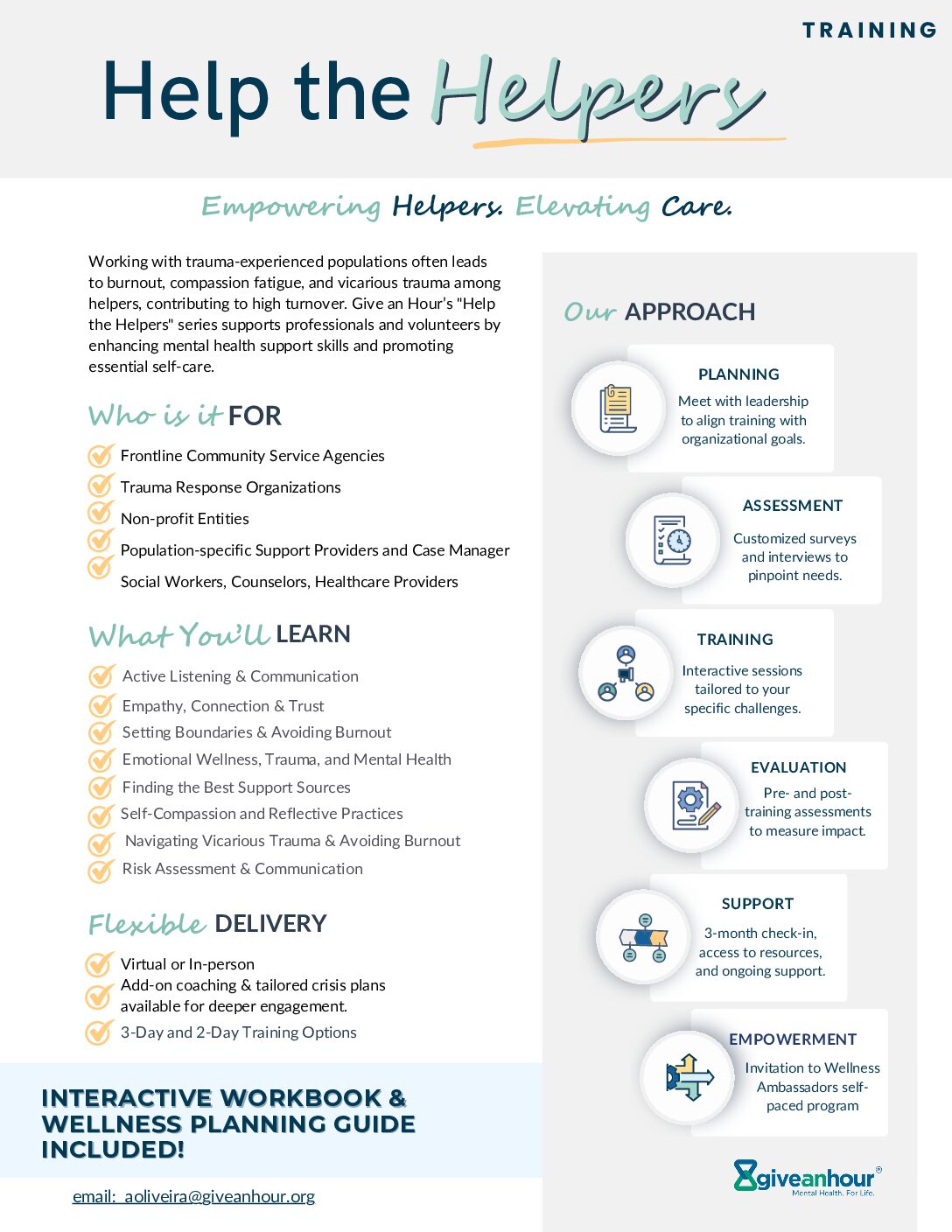
We offer trainings to educate, upskill, and empower individuals on their healing journeys. The purpose is to build resilience by providing support and guiding them in supporting others.

Our current training model centers on customization – we flex for the customer’s needs by listening, learning, creating, evaluating, and adjusting. 

Contact Us for More Info
Peer Support Options:

  • Trauma Informed Peer Support (TIPS) training
  • TIPS Group Facilitator Training
  • Peer Support Groups
Contact Us for More Info

Peer Support for Organizations

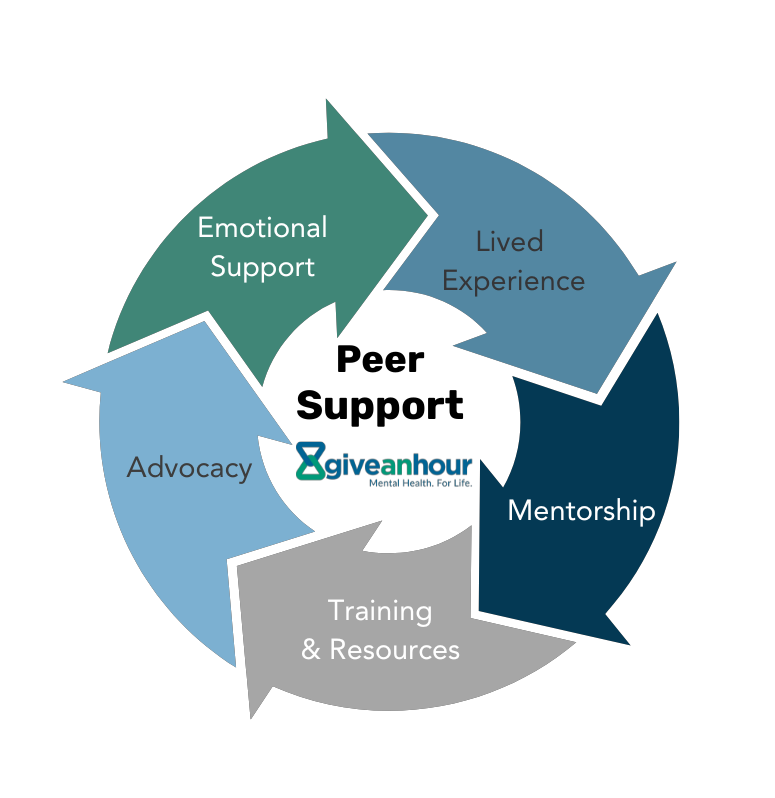
Peer support is the process of giving and receiving encouragement and assistance to achieve long-term resilience and recovery. Peer supporters offer emotional support, share knowledge, teach skills, provide practical assistance, and connect people with resources, opportunities, and communities of support. GAH-trained peer supporters offer their unique lived experience to provide support focused on advocacy, education, mentoring, and motivation.

Peer support is not therapy or professional counseling. While peer supporters have been trained and are being supported by a team of mental health professionals, peer supporters are not licensed mental health clinicians. They are peers, who want to connect and support with those who have experienced similar experiences or traumas.

Military Mile

Give an Hour provides Peer Support Training on Military Bases.  Interested in getting it started on your base? Reach out to us!

  • Facilitated by a Peer Support Professional
  • Customized Peer-to-Peer Trauma-Informed Content

  • Addresses Stigma & Reinforces Suicide Protection Efforts
  • Data Collection & Responsive Integration into Future Trainings

  • Feedback Shared with Soldiers & Leadership After Each Training
Check Out Military Mile
Activities:

  • Gateway Foundational Training
  • Trauma-Informed Peer Support (TIPS) Training for Veteran Employees and Civilian Coworkers
  • Establishment of Organization’s Peer Support for Veteran Employees and Civilian Coworkers
  • Peer Support Leadership (PSL) Training for Supervisors of Veteran Employees
Contact Us for More Info

Veteran MILE

Veteran MILE Gateway Training

The Veteran MILE Gateway Training is a foundational mental health training designed to help organizations better support veterans through early awareness, connection, and action.

Built on a scientifically approved model and informed by public health best practices through our work with the CDC, this training equips employees, supervisors, and teams to recognize early signs of mental health distress, respond with confidence, and engage in supportive, peer-driven conversations.

Participants develop a shared understanding of mental health, strengthen their mental health literacy, and learn practical strategies to identify concerns early and connect veterans to appropriate resources and levels of care. By normalizing conversations around mental health and reinforcing peer support, the training helps reduce stigma and increase help-seeking behaviors.

Outcomes of Veteran MILE Gateway Training

  • Increased ability to recognize early signs of mental health distress in veterans and peers
  • Greater mental health literacy and understanding of common challenges affecting veterans
  • Improved confidence in having supportive, peer-based mental health conversations
  • Increased awareness of pathways to care, resources, and appropriate levels of support
  • Stronger peer connection and sense of belonging in the workplace
  • Reduced stigma around mental health and help-seeking
  • Increased likelihood of early intervention and referral to support services
  • Greater use of personal and team-based mental health strategies
  • Improved workplace culture around mental health, support, and well-being

Visit our Veteran MILE page.